The Rebound Problem – No One Lives Up to Her
|
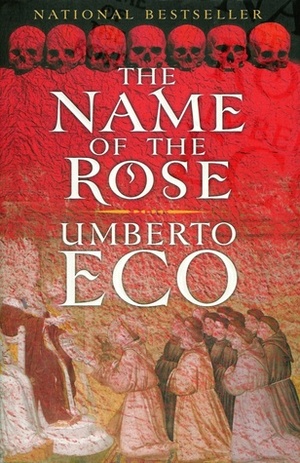
The Name of the Rose
|
I'm going to go ahead and jump up and down yelling SPOILER ALERT! SPOILER ALERT! If you're thinking about reading this one, I'd recommend skipping this blog post for now. But, in all honesty, you shouldn't read it. You should read this instead.
Kazuo Ishiguro may have permanently ruined me with Never Let Me Go. A literary masterpiece that can only adequately be compared to a perfect relationship. If you've had one, you know what I mean. If you haven't, I'm sorry. There's physical attraction, conversation, sex, adventures, and all the little things in between that somehow make everything feel effortless. It starts on a high note, stays there, and somehow manages to end on an even higher one. An epic poem worthy of Shakespeare[1], really. Ishiguro gave me all of that over 288 beautiful pages, and I think I appreciated it just as much as I read those pages as I do a monthish later.
And here's the thing: he didn't even leave me heartbroken. This wasn't some high school sweetheart situation where you're left feeling empty, lost, and wondering what the hell you're supposed to do with yourself. No, Ishiguro gave me the rarest of literary experiences: the perfect goodbye. The kind where both sides know it's time, nobody did anything wrong, and you walk away genuinely grateful for what you had. The final page didn't leave me empty. It left me satisfied. If Ishiguro was a relationship, it would be a rare one indeed.
Unfortunately, getting back out there was going to be a challenge. And somehow, the universe decided to make it even more interesting by arranging not one, but two rebound blind dates.
The first was The Name of the Rose by Umberto Eco, selected as a family book club pick by yet another cousin (I'm losing count of how many cousins I have at this point...). The second was Dungeon Crawler Carl by Matt Dinniman, courtesy of my OG book club.
I approached these dates with an open mind and, more importantly, reasonable expectations. I wasn't expecting another 10/10. I'm not greedy. A 6 or 7 would have been perfectly acceptable. I didn't need fireworks, true love, or even to get past first base. A nice dinner, a modicum of overlapping interests, and a polite peck on the cheek would have been more than enough.
But apparently, my mother and my buddy had very different ideas about what I needed.
Umberto was the date my mom picked. Her friend's daughter. Impressive résumé, decent body, and someone my mom had apparently been thinking for years, "he'd love her." The date is at a Renaissance fair, naturally, where she dresses the part, occasionally throws around some fancy vocabulary, and seems perfectly content to spend the evening explaining things that I have absolutely no interest in understanding.
Dinniman, on the other hand, was the chick my buddy's girlfriend knows. Wild, sexy, funny, and just the right amount of ridiculous. The kind of date where you skip dinner, bypass the small talk, and head straight to the bedroom. No pretenses, no expectations, just a good time. Everyone knows it won't last, but nobody is particularly concerned about that.
My mom was dead wrong on both counts. I didn't need another great love after Ishiguro, and even if I did, I sure as hell wasn't going to find it with Umberto. What I needed was a little fun, something that didn't require an emotional investment or leave me questioning my existence afterward. Thankfully, my buddy understood the assignment. My mother, apparently, thought I needed a woman who could conjugate Latin.
To be fair, Umberto was dealt a pretty shitty hand. Following a perfect 10 is a thankless job, especially when there's another date waiting in the wings who's making you wonder why you bothered putting on pants for dinner in the first place. I'll take a little responsibility for the unfair comparison. But not all of it. Because even without Ishiguro's masterpiece and the pretty enjoyable rebound happening with Dungeon Crawler Carl, The Name of the Rose just isn't a particularly good book.
I've mentioned before that I'm a slow reader, usually 60–90 seconds a page. This is some combination of me just legitimately being slow and my OCD-driven need to read every word in my head clearly. With The Name of the Rose, that already questionable efficiency took a serious hit. Every page was taking me two to three minutes.
So, by page 432, when I arrived at this little literary gem:
Then they all were on that body, flinging excrement on her, farting in her face, urinating on her head, vomiting on her bosom, tearing out her hair, whipping her buttocks with glowing torches.

I was approximately 1,296 minutes into this date. And I had absolutely no fucking idea what was happening. I was lost, confused, and, frankly, had stopped caring sometime around the appetizers. But this passage certainly got my attention. Not because I understood it, but because it was a rather dramatic departure from the complete and total boredom that had preceded it.
Of course, the irony is that Umberto had actually gone out of his way to tell me exactly what I was about to read at the beginning of the chapter:
In which Adso, listening to the "Dies irae," has a dream, or vision, howsoever you may choose to define it.
A dream. He literally tells me it's a dream. And somehow, I missed it.
Why? Because I'd mentally checked out of the date. My mother's friend's daughter had apparently been telling me about shopping for cabbage, and I was somewhere else entirely. I was so disengaged that I missed the basic premise of an entire chapter. That's not entirely Umberto's fault, but it certainly isn't a ringing endorsement of the reading experience either.
And this is really the crux of the problem with dating Umberto after Ishiguro. As you may recall, what I loved most about Never Let Me Go was that every single word mattered. Every sentence had a purpose. Every kiss was perfectly placed, every joke landed (there were no jokes, we're back to comparing this to the date), and every smile gave me butterflies.
With The Name of the Rose, I felt like I was sitting across from someone who was determined to make every conversation as unnecessarily complicated as possible. I'd estimate 87% of the words were meaningless. And not just meaningless in the sense that they didn't advance the plot. They were boring. Painfully, excruciatingly boring. Every tenth word or so, she'd throw out something that required me to quickly Google it just to make sure I was still participating in the same conversation. Every seventeenth word was an opportunity to show off her Latin skills. And in between were discussions about her ex-boyfriends, grocery shopping, and her deep love of termites.

I'm sure there's an audience for this. Somewhere. Probably at a Renaissance fair. Wearing robes. Speaking Latin. But I am not that audience.
And then, finally, we get to the end of the date. The last 50 or so pages. After nearly 1,500 minutes of this, I'm starting to get a little excited. Surely, there's a payoff coming. A brilliant mystery. A clever detective reveal. Some grand explanation for why monks are being murdered left and right in this faraway land. I've put in the time. I've suffered through the conversations. I've Googled enough Latin to qualify for some sort of honorary degree. Surely, the dessert is going to be worth it.
And what do I get?
An old blind monk who thinks comedy is the Devil's work and starts murdering his brethren to prevent them from reading one of Aristotle's books that he fears will make some monks laugh.

That's it.
That, my friends, is not a joke.
Well, technically, I suppose the entire premise is a joke. Just not a particularly funny one.
502 pages. That's what we're doing here. 502 pages centered around one of the lamest concepts I've ever encountered in a book. A plot so absurdly underwhelming that the entire thing could have been resolved by the old monk simply destroying the book. Throw it in the trash. Burn it. Use it as toilet paper. Hide it under a pile of cabbage. Literally anything other than murdering half the monastery.
Instead, we get 502 pages of murder, mystery, theological debates, historical exposition, and enough Latin to make me question whether I accidentally signed up for a graduate seminar rather than a book club.
I can appreciate a complicated book. I can appreciate an intellectual challenge. I can even appreciate a book that asks me to work a little. But there's a difference between making a reader think and making a reader wonder whether they've accidentally fallen asleep with their eyes open. At some point, complexity needs to deliver something. And after all that time, I was left with the literary equivalent of a date who spends three hours explaining why she hates comedy before telling me her greatest accomplishment was reading Green Eggs and Ham when she was six.
Some of you may think I'm being unfair. Maybe I am. But let's look at the stats, because apparently I'm not the only one who struggled to maintain this relationship.
Our book club started with 12. If we're being honest, two of those never really counted, as they proved they couldn't keep up with such a literary crew. By The Name of the Rose, book eight, we're down to eight readers.
Of those eight, two finished the date. I think two or three started and left before the main course was served. One ditched her at the front door before even going in. And the rest did the wise thing and told good old Mom that she should stay out of their dating lives.
But I've now read 8 of 8 books.
I am the last man standing.
Not necessarily the smartest, not necessarily the happiest, and certainly not the one who enjoyed himself the most. But I showed up, paid for dinner, endured the cabbage conversation, and saw this thing through to the bitter end.
And for that, I'll take a bow.
[1] reminder here, I hate Shakespeare and on numerous occasions this has lead to book club strife