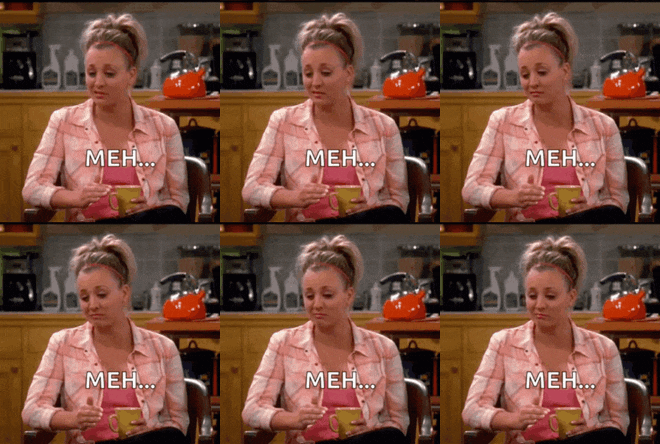
When A Book Defines the Term "Meh"
|
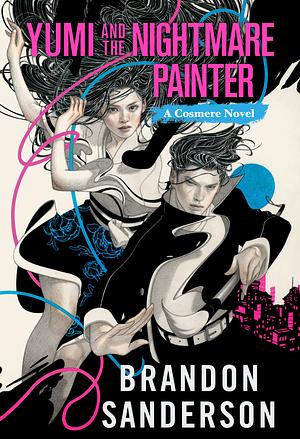
Yumi and the Nightmare Painter
|
In a world already overflowing with mediocrity, this book somehow still manages to stand out by fully committing to the art of being aggressively meh.
I have read Sanderson before. I cannot recall details, titles, or characters, but I also do not remember ever thinking, “Why am I doing this to myself?” That thought, however, dominated approximately ninety two percent of this yawn inducing experience.
At its core, this book asks a bold question. What if you built a fantasy novel around stacking rocks?
That is not a metaphor. It is literally stacking rocks.
If you would like to replicate the experience, feel free to step outside right now and stack a few rocks yourself. See how long your attention holds. Unless you are a masochist or deeply invested in geology, the answer is not long. No amount of vaguely defined spirits was ever going to rescue this concept from the depths of mediocre hell.
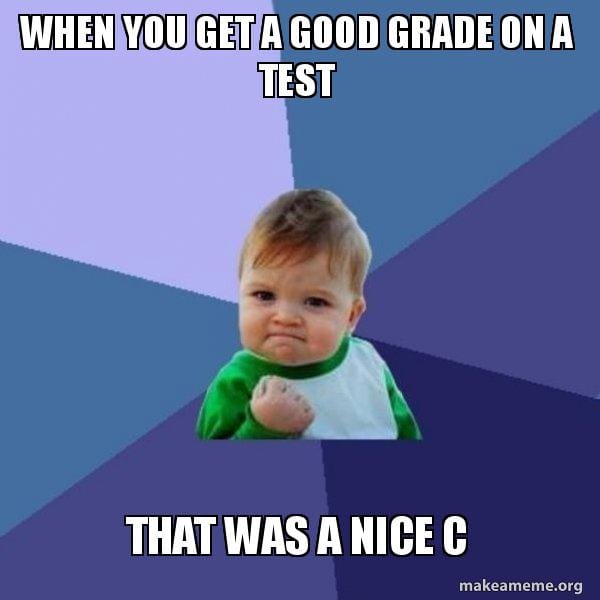
The second half of our protagonist duo is a painter who captures spirits through art, which is genuinely more interesting on paper. Unfortunately, interesting on paper does not translate to interesting on the page. It is not enough to save the book from feeling like a high school teacher’s worst nightmare, being forced to assign a passing grade to a paper that absolutely deserves a fifty nine percent but must be nudged along so the student can exit the building and enter a lifetime of underpaid employment.
Sanderson clearly realizes that stacking rocks is not inherently compelling, so he attempts to force excitement through philosophy. Specifically, he insists that art is purely subjective and that stacking rocks can be equivalent to Picasso. This is not implied or explored. It is directly stated by the narrator as fact.
No, Brandon. You are wrong.
No amount of subjective hand waving will convince me that stacking rocks deserved three hundred sixty two pages. You would have a far better chance convincing me that a snot rocket launched by the homeless guy on the corner is art. A much better chance, actually.
Then there is the postscript, which takes a brief but impressive turn into self congratulation. Sanderson stops just short of declaring this one of his greatest achievements, but the tone is unmistakable. He even dedicates the book to his wife (I'm sorry Mrs. Sanderson, I don't know you personally, but apparently your husband thinks you're pretty mediocre).
Looking back through my notes, the most damning realization is how little my opinion changed. At thirty percent in, I wrote, “I have almost nothing to say.” At one hundred percent in, that remains true. Somehow, despite having nothing to say, I have still managed to write an entire blog post about it. Talent finds a way.
Yes, the characters technically develop. Yes, the plot moves slightly faster than the DMV line I once compared it to. But these are marginal improvements at best. The book remains deeply forgettable.
To illustrate just how low the bar was set, here is a note from thirty percent in:
“This is a fantasy novel. A fantasy novel. And somehow the most memorable section so far is a brief detour into a woman shopping. Not because I enjoy shopping, I very much do not, but because it briefly acknowledged the existence of boobs. That is where we are setting the bar.”
Upon finishing the book with an audible sigh of relief, I can confidently report that the boobs still land in the top three most memorable moments. They easily outrank the awkwardly described final kiss, which manages to be both stiff and underwhelming. Yes, first kisses are often awkward. That does not excuse writing them in a way that makes the reader feel nothing but mild embarrassment for the author.
At fifty percent in, around page one hundred eighty one, I wrote the following:
“We are now officially fifty percent in, nearly twenty percent past my last check in, and somehow the book has managed the impressive feat of getting absolutely no better. Sanderson has failed miserably here. I have this vague memory that he once wrote a decent book or two, but that memory is rapidly eroding. It is genuinely hard to believe this novel came from someone capable of competent writing. Either my memory is lying to me or something has gone deeply wrong.”
After finishing the book, I stand by every word.
I did not read this book out of curiosity, enjoyment, or interest in the characters. I read it for one reason only. To go three for three in the family book club. And frankly, that victory was worth every painful page.
Now for the controversial part. I felt like I may have tickled a family member by suggesting Sanderson may have used ChatGPT. To be clear, this was not meant as an insult. I am fully on board with AI improving creative expression. My suspicion came from the overwhelming use of em dashes, which often signals AI generated prose.
After some digging, I learned the truth. The em dashes are not ChatGPT. They are simply Sanderson’s thing.
Why this is his thing remains unclear. It is not good. Every page filled with double hyphens still screams AI generated, even if the responsibility belongs entirely to the author. Honestly, ChatGPT might have helped here. I recently learned that one of the best video games of the decade used AI and I applauded. Brandon, take notes.
Halfway through, I wrote that I felt nothing. At one hundred percent, I still feel nothing. There is a brief stretch between roughly sixty five and eighty percent where the book flirts with being interesting, then it veers off and ends exactly where it began.
I eventually came to a quiet realization. This is one of those books people praise because it looks impressive on a shelf and was written by a generally acceptable author, not because it is enjoyable to read.
Oh well.
Three for three.
Suck it, family.