God is Change . . .
|
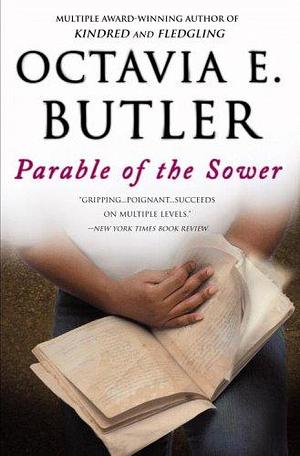
Parable of the Sower
|
God is Change.
And nothing more.
That line alone is doing an absurd amount of work.
I am not about to pretend I have any real insight into what God is or is not. Anyone who tells you they are “sure” about God is, at best, wildly overconfident and, at worst, selling something. The whole point is that It is unknowable. But framing God not as a being, not as a plan, not as a moral authority, but simply as Change is one of the most intellectually honest approaches to the unknown that I have ever read.
It is unsettling in the right way.
No one in my inner circle would ever describe me as a jolly, optimistic person. That is not my lane. I am not a nihilist, but I am absolutely a realist. And Parable of the Sower, much like The Road, feels less like speculative fiction and more like an extremely uncomfortable rehearsal.
Shortages everywhere. Institutions hollowed out. Violence not as spectacle but as routine. People doing awful things not because they are cartoon villains but because hunger and fear make monsters out of otherwise normal humans. Or worse, unchained, even without hunger or fear, is monstrous.
Thugs murdering each other. Obviously.
Cannibalism. Of course.
Midday rape. Sadly plausible.
Life is nasty, brutish, and short. Hobbes knew what he was talking about, even if he did not live long enough to see it live-streamed.
What Butler does so well is refuse to sanitize human nature. This is the dark, gross, deeply uncomfortable version of humanity under pressure. And somehow, she still manages to build something new out of it. Something thoughtful. Something sharp. And within it all, she add hope in the misery.
And yeah. I loved it. I loved it a lot.
If you are looking for something uplifting, comforting, or vaguely inspirational, go read literally anything else. This book is full of death, including scenes that genuinely hurt to read. People you care about die suddenly, unfairly, and without narrative closure. Because that is how it works when things fall apart.
But in the middle of all that misery, Butler layers in ideas that refuse to let the story collapse into despair. A collapsing society. A government even more useless than it is today. Religion re-imagined. Sex without much romantic gloss. Hope that feels fragile and earned rather than motivational-poster nonsense.
There is even a new designer drug that makes people love fire. Which sounds almost whimsical until you realize it mostly results in a lot of people being burned alive. Fun, in the worst possible way.
Then there is the “magic,” if you want to call it that. A condition, possibly linked to drug use during pregnancy, that causes certain people to feel the pain of others as if it were their own. Not metaphorically. Physically. To the point where witnessing violence can cause real injury. It is an idea that should not work. And yet it does. It forces empathy into a world that desperately does not want it.
By the time I finished, I genuinely could not think of anything Butler could have added to make this story more layered, more disturbing, or more compelling.
I will shortly start the second book in the trilogy, and I am already annoyed. Not because I think it will be bad, but because I know I am going to want answers that will never come. Butler died before finishing the series, which is incredibly rude of her, personally. At some point I may need to dig her up, perform some deeply unethical Frankenstein nonsense, and force her to finish the story. Because once you start thinking about God as Change, it is very hard to stop.
And change, unfortunately, does not care whether you are ready for it or not.